
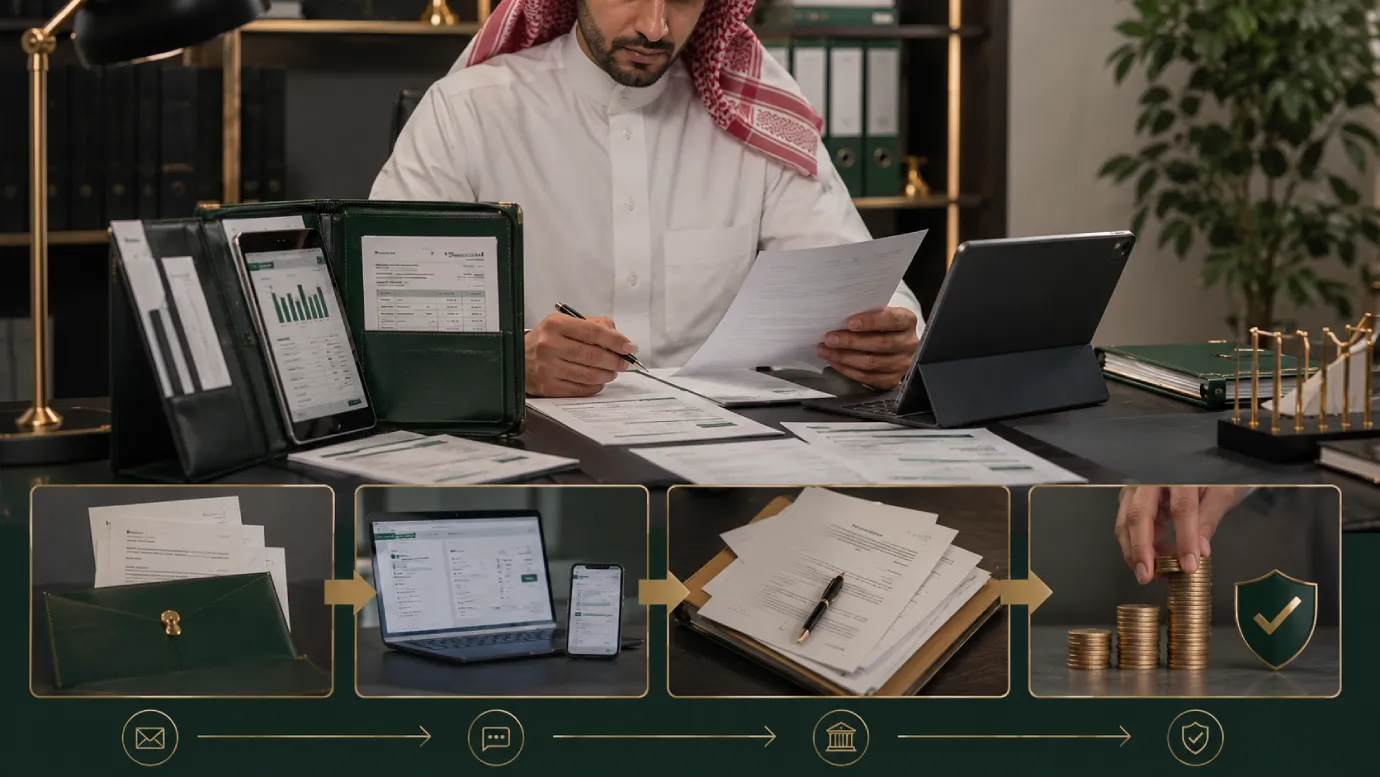
Commercial Debt Collection in Saudi Arabia: From Demand to Enforcement
Late payment remains a common concern for suppliers, contractors, service providers and other businesses operating in Saudi Arabia. However, commercial debt collection does not always begin with court proceedings, and the existence of an invoice or account statement does not automatically allow a creditor to proceed directly to enforcement.
The appropriate legal route depends on the nature of the debt, the available documents, whether the debtor disputes liability or amount, and whether the creditor holds an enforceable instrument. A structured written demand and settlement may be sufficient in one case, while another may require a commercial claim to establish the debt. Where a valid enforceable instrument already exists, the creditor may be able to proceed directly with an enforcement application.
Direct answer: How are commercial debts collected in Saudi Arabia?
- Review the contract, invoices, supporting documents, amount and payment due date.
- Send a documented written payment demand, while considering any applicable pre-action notice requirement.
- Assess whether a settlement, debt acknowledgment or secured payment plan is commercially appropriate.
- File a monetary claim before the competent court if the debt is disputed or no enforceable instrument exists.
- Submit an enforcement application if the creditor holds a valid enforceable instrument for a specific and due amount.
- Follow the enforcement process, including available disclosure, attachment and recovery procedures.
The correct route depends on the evidence, the debtor’s objections and financial position. There is no single collection procedure suitable for every commercial debt.
What is a commercial debt?
A commercial debt is a monetary obligation arising from a business transaction or commercial relationship. It may result from the sale or supply of goods, the provision of services, construction works, commercial commissions, recurring business dealings or a documented settlement between businesses.
Common examples include:
- The unpaid price of goods delivered to a customer.
- Outstanding fees for consultancy, technology or professional services.
- Construction payments linked to completed stages or approved work.
- An unpaid balance arising from several invoices, payments and returns.
- An amount confirmed in a debt acknowledgment or settlement agreement.
- A monetary right recorded in a promissory note, judgment or other enforceable instrument.
Describing an amount as a commercial debt does not determine the procedure by itself. The underlying transaction, identity of the debtor, nature of the evidence and any objection raised by the debtor must also be examined.
The difference between demanding, proving and enforcing a debt
One of the most common mistakes in debt-recovery files is treating the following stages as though they were the same:
| Stage | Purpose | When it is used |
|---|---|---|
| Payment demand | Request payment and document the creditor’s position | Before litigation or as part of pre-action collection |
| Establishing the debt | Obtain a judgment confirming liability and amount | When the debt is disputed or no enforceable instrument exists |
| Enforcement | Compel payment of an established right | When a judgment or other valid enforceable instrument is available |
An enforcement court does not ordinarily determine a complex contractual dispute from the beginning. Enforcement is based on an enforceable instrument, while the competent court determines disputed liability where the creditor must first establish the underlying right.
First step: Review the debt file
Before sending a demand or filing a claim, the creditor should establish a clear and accurate picture of the debt. This involves more than confirming the total amount shown in the accounting system.
The review should address the following questions:
- Who is the correct legal debtor?
- Was the contract made with a company, establishment or individual?
- What is the source of the obligation: a contract, purchase order, invoice, instrument or settlement?
- Has the creditor fully performed its obligations?
- Has the payment date arrived?
- Are there partial payments, deductions, returns or credit notes?
- Has the debtor objected to the goods, services or account balance?
- Is there a guarantee, security or promissory note?
- Are there indications of insolvency or bankruptcy?
Key documents to review
- The contract, appendices and change orders.
- Quotations and evidence of acceptance.
- Purchase orders.
- Electronic invoices.
- Delivery receipts and acceptance records.
- Completion reports and milestone approvals.
- Emails and other correspondence.
- A detailed account statement.
- Bank transfers and payment receipts.
- Credit notes and return records.
- Debt acknowledgments, settlements and payment plans.
- Promissory notes, judgments or other enforceable instruments, where available.
Early commercial contract and document review can help identify the contractual payment trigger, authorised approvers, objection process and the amount properly due.
Is an invoice enough to prove a commercial debt?
An invoice may be important evidence, but it does not conclusively prove every debt. It may show that the supplier issued a financial claim, while further evidence may still be required to prove that the customer ordered the goods or services, that performance occurred, that the price matches the agreement and that payment is due.
An invoice is generally stronger when supported by:
- A contract or purchase order.
- A signed delivery note or electronic delivery record.
- A completion approval or certificate.
- Correspondence accepting the amount or requesting additional time to pay.
- A partial payment linked to the invoice.
- A balance confirmation or account statement reviewed by the parties.
In contrast, the claim may be challenged by evidence of payment, cancellation, non-performance, an incorrect amount, returns or a credit note. The detailed distinction between invoice validity and debt entitlement should be addressed in a separate article on electronic invoices as evidence in commercial disputes.
Written payment demands and pre-action notices
Many commercial collection files begin with a structured written demand. It should not simply ask the debtor to pay “all outstanding amounts.” A precise demand may help clarify the dispute and produce useful evidence before proceedings begin.
What should the demand include?
- The names and details of the creditor and debtor.
- The basis on which the debt arose.
- The relevant contract and invoices.
- The amount claimed and the calculation method.
- The payment due date.
- Payments, deductions and credit notes already accounted for.
- A reasonable period for payment or response.
- Payment instructions and contact details.
- A professional statement of the next legal step without exaggerated or threatening language.
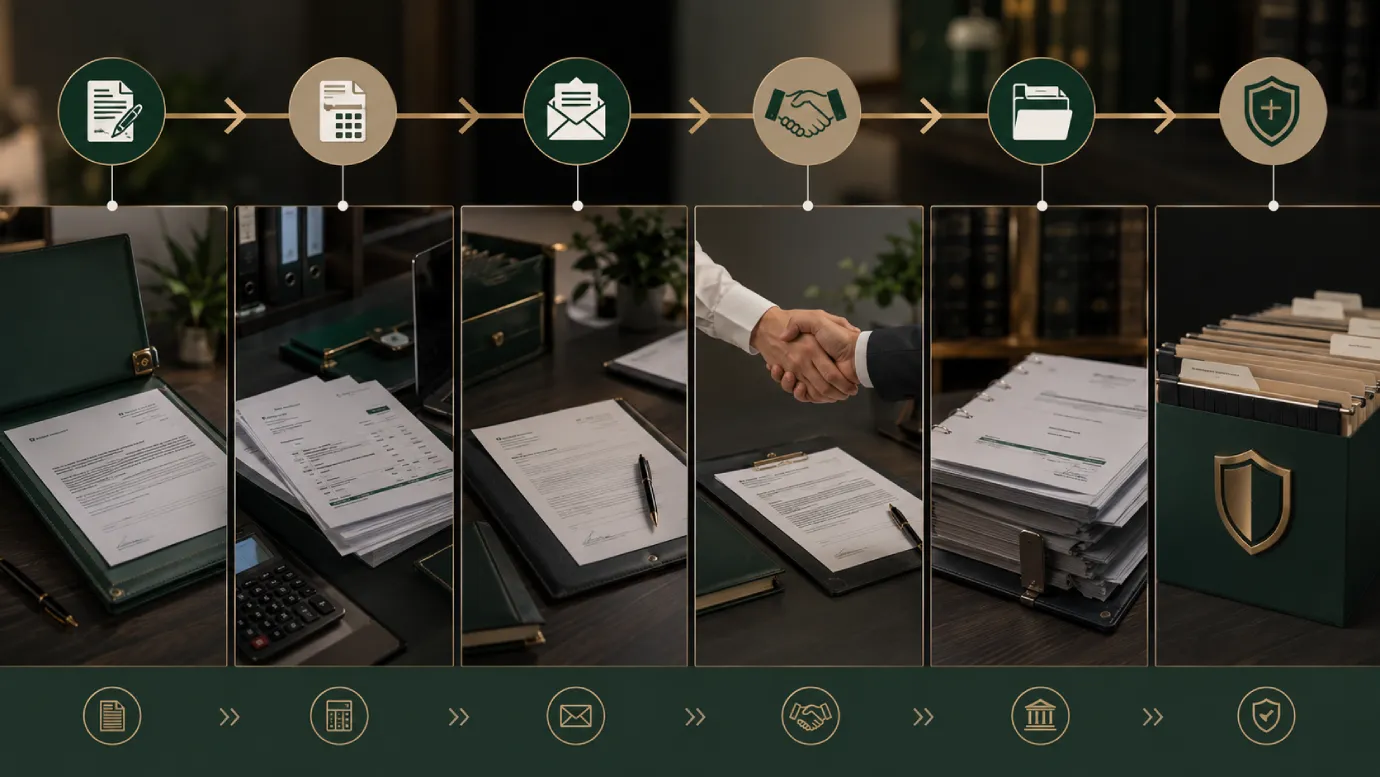
Saudi commercial procedure includes a written pre-action notice requirement for the categories of claims identified by the applicable rules. The creditor should therefore verify whether that requirement applies and preserve evidence showing when and how the notice was sent and received.
How should the demand be sent?
A method capable of being evidenced should be used. This may include the address or email designated in the contract, another agreed communication channel, or an electronic method that preserves the date, content and recipient details.
The debtor’s response may reveal whether it:
- Accepts the full debt.
- Accepts only part of it.
- Requests an extension or instalment plan.
- Claims that payment has already been made.
- Challenges performance or amount.
- Does not respond.
When may settlement be more appropriate than litigation?
Settlement is not necessarily a waiver of the creditor’s rights. It may reduce time and risk, particularly where the debtor accepts the debt but is experiencing temporary cash-flow difficulties.
A settlement may be suitable where:
- The debtor acknowledges the debt.
- The parties wish to preserve their commercial relationship.
- A meaningful initial payment and clear instalment schedule can be agreed.
- The debtor provides appropriate security or a guarantor.
- Delay or financial distress creates practical collection risk.
- Some amounts are accepted while others remain disputed.
What should a settlement agreement contain?
- A clear acknowledgment of the principal amount.
- Payments already made.
- The final agreed balance.
- Instalment dates and payment method.
- The consequences of missing an instalment.
- Any agreed guarantees or security.
- The effect on any existing court or enforcement proceedings.
- The authority of the persons signing for each party.
The enforceability and legal effect of a settlement depend on its drafting, documentation and method of formalisation. Legal review helps reduce the risk of relying on an agreement that becomes difficult to enforce after default.
When is a court claim required?
A monetary claim may be required where no enforceable instrument exists or where the debtor disputes the existence, amount or maturity of the obligation.
Common situations include:
- The debtor denies the contract or purchase order.
- The debtor claims that the goods were never delivered.
- The parties dispute quality, completion or performance percentage.
- The invoice amount or deductions are disputed.
- There are reciprocal accounts or unallocated payments.
- No debt acknowledgment or directly enforceable instrument exists.
- The amount requires accounting or technical expert review.
Which court has jurisdiction?
Jurisdiction depends on the nature of the relationship, status of the parties and subject matter of the claim. Saudi commercial courts hear disputes falling within their statutory jurisdiction, but the participation of a company does not by itself determine jurisdiction without examining the underlying transaction and requested relief.
The review should consider:
- The commercial status of the parties.
- The nature of the contract or transaction.
- The relief requested.
- Any arbitration or jurisdiction clause.
- The appropriate territorial forum.
Filing through Najiz
The Saudi Ministry of Justice provides electronic filing services through the Najiz platform. The claimant selects the relevant litigation service, identifies the claim classification, enters the parties’ details and relief requested, and uploads the supporting documents.
The statement of claim should clearly explain:
- The underlying relationship.
- The obligation performed by the claimant.
- How the amount arose.
- The payment due date.
- Payments already credited.
- The final outstanding balance.
- The contractual and legal basis of the requested relief.
Documents used to support a debt claim
| Issue to prove | Potential supporting documents |
|---|---|
| Existence of the contract | Contract, quotation, purchase order and correspondence |
| Performance by the creditor | Delivery note, acceptance record, completion approval and reports |
| Amount of the debt | Invoices, account statement and detailed claim schedule |
| Payment maturity | Contractual payment clause, invoice and milestone approval |
| Non-payment | Account statement, demands and bank records |
| Debtor acknowledgment | Acknowledgment emails, extension requests, settlement or balance confirmation |
When may the creditor proceed directly to enforcement?
Saudi enforcement procedure is based on the existence of an enforceable instrument recording a specific amount that is due for payment. Before submitting an application, the creditor should confirm that the document qualifies as an enforceable instrument and that the debt is clear and payable.
Depending on their nature and satisfaction of applicable requirements, enforceable instruments may include:
- Court judgments, decisions and orders.
- Arbitral awards accompanied by the required enforcement order.
- Settlement records issued or approved by authorised bodies.
- Commercial papers.
- Notarised contracts and instruments.
- Foreign judgments and instruments that satisfy enforcement requirements.
- Other documents granted enforceable status by law.
An ordinary contract, invoice or account statement should not automatically be treated as directly enforceable merely because it records an amount. The legal nature and formal requirements of the document must first be examined.
How is an enforcement application filed through Najiz?
The Ministry of Justice allows enforcement applications to be submitted electronically through Najiz. The service generally requires information about the enforcement applicant and the debtor, an active bank account belonging to the applicant, the enforceable instrument and any required authority documents where an agent files the request.
Preparation commonly includes:
- Identifying the type of enforceable instrument.
- Reviewing the creditor’s and debtor’s details.
- Confirming the principal amount and any payments already made.
- Uploading a clear and complete copy of the instrument.
- Ensuring that the requested amount matches the instrument.
- Monitoring notices and procedural requests through Najiz.
What happens after the enforcement application?
The available steps depend on the nature of the enforceable instrument, the debtor’s response and the assets available for enforcement. In general, Saudi enforcement law regulates notice to the debtor, disclosure of assets, attachment and the procedures used to satisfy the creditor’s right.
Assets that may be relevant, subject to the applicable legal limits, can include:
- Bank and financial accounts.
- Amounts owed to the debtor by third parties.
- Movable assets.
- Real estate.
- Shares and other financial rights capable of enforcement.
A judgment or enforceable instrument does not necessarily mean immediate recovery. Actual collection may depend on the existence of assets, creditor priority, preferential rights, enforcement disputes and the debtor’s financial position.
Which route may fit the claim?
| Status of the claim | Potential initial route |
|---|---|
| The debtor accepts the debt and requests time | Documented settlement and payment schedule with appropriate security |
| Invoices and a contract exist, but performance is disputed | Written demand followed by a court claim, depending on jurisdiction |
| A judgment or valid enforceable instrument exists | Enforcement application through Najiz |
| The amount requires account reconciliation or expert review | Court claim supported by a detailed schedule and expert review where needed |
| Some invoices are accepted and others are disputed | Separate accepted and disputed amounts and define the remaining issues |
| There are signs of insolvency or bankruptcy | Review the effect of bankruptcy proceedings before continuing individual recovery |
What if the debtor company is financially distressed?
Debt recovery requires a different assessment where there are serious indicators of financial distress, such as widespread payment default, closure of business premises, multiple creditor claims or the opening of bankruptcy proceedings.
The creditor should determine:
- Whether a bankruptcy procedure has formally commenced.
- The type of procedure opened.
- Whether the claim must be submitted to a trustee or other responsible party.
- Whether the debt is secured or unsecured.
- How the procedure affects litigation and individual enforcement.
- Whether earlier transactions or payments require review.
Delay in monitoring bankruptcy announcements or submitting a claim may complicate participation in the procedure or distributions. Further information is available in the firm’s article on the effect of Saudi bankruptcy proceedings on creditor recovery.
Judicial costs in commercial debt claims
Saudi judicial claims and applications may be subject to judicial costs under the applicable law and regulations. The amount depends on factors such as the type of claim, amount sought and procedural application.
The Ministry of Justice provides an electronic judicial-cost calculator. Businesses should therefore estimate costs using the actual claim details rather than relying on a single figure for all debt-recovery matters.
Potential cost categories may include:
- Judicial costs relating to the principal claim.
- Costs relating to certain procedural applications.
- Applicable costs connected with enforcement disputes or requests.
- Expert, translation or documentation expenses where needed.
- Professional fees agreed with legal counsel.
Common mistakes that delay debt recovery
1. Delaying action without reviewing the debtor’s position
Delay may weaken available evidence, reduce recovery options or allow the debtor’s financial condition to deteriorate.
2. Claiming an unexplained total balance
The claim should identify invoices, payments, returns, deductions and credit notes so that the final balance can be verified.
3. Filing against the wrong legal entity
A trade name may not identify the correct legal debtor. The creditor should confirm the legal entity or establishment that entered into the transaction.
4. Treating an invoice as an enforceable instrument
An invoice may support proof of the debt, but it does not automatically permit direct enforcement.
5. Failing to prove delivery or performance
An invoice amount may be insufficient if the dispute concerns whether the corresponding obligation was performed.
6. Signing an unclear settlement
A poorly drafted settlement may contain inconsistent provisions, unintended waivers, an unclear payment schedule or ineffective security.
7. Ignoring the debtor’s potential defences
The creditor should anticipate arguments concerning payment, defects, delay, jurisdiction, arbitration or lack of authority before filing.
8. Ignoring bankruptcy indicators
Individual recovery may not be the appropriate route once a bankruptcy procedure has commenced or the debtor’s financial position has materially changed.
Does partial payment amount to an acknowledgment of the entire debt?
A partial payment may support the existence of a transaction or part of the claimed debt, but it does not necessarily mean that the debtor accepts every invoice or the entire outstanding balance.
Its effect may depend on:
- The invoice number or payment reference.
- Correspondence accompanying the payment.
- Whether several debts exist between the parties.
- Whether the debtor expressly reserved objections to the balance.
- How the payment was recorded in the account statement.
Each payment should therefore be linked to the debt it was intended to discharge wherever possible.
When should a business instruct a debt collection lawyer?
Finance teams can manage routine reminders and account follow-up, but legal assistance becomes more important when ordinary payment delay develops into a legal dispute or a material recovery risk.
A business may benefit from instructing a commercial debt collection lawyer in Saudi Arabia where:
- The debt value is significant.
- Multiple contracts and invoices are involved.
- The debtor denies the contract, delivery or performance.
- Technical or accounting issues are disputed.
- An arbitration or jurisdiction clause exists.
- There is a promissory note, guarantee or guarantor.
- A binding settlement must be negotiated.
- A judgment or instrument requires enforcement.
- There are indications of insolvency or bankruptcy.
- The debtor or relevant assets are located outside Saudi Arabia.
What does a debt collection lawyer do?
Legal work may include:
- Reviewing the debt and supporting documents.
- Identifying the correct debtor and competent forum.
- Verifying the claim calculation.
- Preparing the pre-action notice and payment demand.
- Negotiating settlement terms and security.
- Preparing the statement of claim and legal submissions.
- Responding to the debtor’s objections.
- Submitting and following an enforcement application.
- Assessing bankruptcy and multiple-creditor risks.
Commercial debt collection file review
Debt recovery should not begin by automatically selecting litigation or enforcement. The first step is to identify the legal nature of the documents, whether liability and payment maturity are established, and the debtor’s financial position.
Mahmoud Alshangiti Law Firm reviews contracts, invoices, purchase orders, delivery records, correspondence, account statements and enforceable instruments to provide an initial assessment of the appropriate route, based on the specific facts and documents.
Official sources
- Commercial Courts Law
- Enforcement Law
- Ministry of Justice Electronic Services
- Najiz Platform
- Judicial Cost Calculator
- Bankruptcy Law
Legal disclaimer: This article provides general legal information and does not constitute a final assessment of any particular claim or a guarantee of recovery. The appropriate procedure and outcome depend on the debt, supporting documents, debtor’s arguments, jurisdiction and financial position.